






Welcome
Powerful Supermarket Research Resources
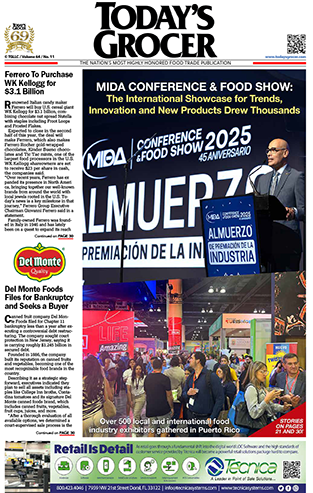
We provide the news, insights and strategies that keep food and drug retailers informed and ahead of the curve.
TODAY'S GROCER reaches chain and independent supermarkets, convenience stores, wholesalers, distributors, category managers and executives across the supply chain — connecting top decision-makers with the information and opportunities that drive growth.
You will find no stronger vehicle for promoting your interests to industry leaders. TODAY’S GROCER is a platform for visibility, validation, and growth.

The Publisher Speaks
In grocery retail, geography always matters — but in Puerto Rico, geography defines everything.
For mainland operators, supply-chain disruption is episodic. For Puerto Rico’s retailers and wholesalers, it is structural. The island’s food system operates under permanent constraints: long shipping lanes, import dependency, freight volatility and climate exposure. These forces do not appear during crises; they exist every day.
What makes Puerto Rico’s grocery sector worth close attention is not its vulnerability, but its response. Despite importing roughly 85 percent of its food, the market remains dominated by local supermarket chains. Despite intense pressure from global big-box competitors, neighborhood banners continue to hold share. And despite supply-chain shocks that would paralyze many markets, the system continues to function — often through improvisation, discipline and deeply embedded relationships between retailers and distributors.
This is not an academic exercise. The strategies emerging in Puerto Rico — multi-sourcing, distributor-led risk management, fresh-forward differentiation and pragmatic digital adoption — offer lessons for retailersverywhere facing a more volatile future.
The story that follows is not simply about an island market under pressure. It is about how constraint forces clarity — and how Puerto Rico’s grocery industry is quietly redefining what resilience looks like.
An Island Under Pressure: How Puerto Rico’s Import Dependence Is Reshaping Grocery Retail
By the Publisher
On most weeks, grocery retailers in Puerto Rico operate in a reality unlike anywhere else in the United States mainland. The shelves may look familiar, but the supply chain behind them is far more fragile. Roughly 85 percent of the food consumed on the island is imported, a structural dependence that magnifies every shift in global pricing, freight costs, fuel surcharges and logistics timing. When the mainland feels a ripple, Puerto Rico feels a wave.
Yet despite these pressures, the island’s supermarket sector remains one of the most dynamic — and competitive — regional grocery markets in the U.S. Local chains continue to dominate food sales, wholesalers function as risk managers as much as distributors, and retailers adapt faster than many of their mainland counterparts simply because they have to.
Puerto Rico’s grocery market is not just a case study in resilience. It is a lesson in how extreme supply-chain dependence reshapes retail strategy from the ground up.
A Market Built on Imports — and Vulnerability
Puerto Rico’s reliance on imported food defines nearly every operational decision a retailer makes. Long shipping routes, port congestion, container availability and global commodity swings are not abstract concerns — they show up immediately in fill rates, pricing and promotional planning.
Compounding the challenge is the island’s limited agricultural footprint. Only about 13 percent of supermarket food items are locally produced, a striking figure that highlights both the vulnerability of the supply chain and the difficulty of “localizing” assortment in a meaningful way.
As one distributor put it, “Errors compress here. There’s no cushion. When something breaks, it breaks fast.”
For retailers, that reality forces a mindset that is more proactive than reactive. Inventory buffers, multi-supplier strategies and close distributor relationships are not optional — they are survival tools.
A Competitive Landscape Unlike Anywhere Else
Despite its size, Puerto Rico supports a dense and fiercely competitive grocery landscape.
At the center are strong local banners:
- Supermercados Econo, the island’s largest local chain, with more than 60 stores and a growing e-commerce presence through ECONO ToGo
- SuperMax, a metro-focused operator known for fresh departments and prepared foods
- Pueblo, a legacy brand dating back to the 1950s, along with its Amigo banner
- Selectos, Mr. Special, Ralph’s and regional independents that drive competition beyond San Juan
- Walmart, Sam’s Club and Costco, leveraging EDLP, club formats and general merchandise to capture large household baskets
The real battleground is not square footage. It’s fresh departments, private label and price perception.
How Shoppers Are Behaving Now
Puerto Rico’s consumers are navigating the same inflationary pressures as mainland shoppers, but with fewer buffers. Average monthly grocery spending has remained relatively flat, suggesting households are trading down, buying fewer units or shifting into value tiers.
Several trends stand out:
- In-store shopping still dominates, with the vast majority of consumers preferring physical stores
- Self-checkout adoption is rising, especially among younger and time-pressed shoppers
- Fresh foods — produce, bakery, deli and ready-to-eat meals — continue to drive loyalty
- Interest in functional and wellness-oriented products is growing, particularly among millennials and Gen Z
Wholesalers as the System’s Stabilizers
Behind every successful retailer in Puerto Rico stands a distributor absorbing risk that most mainland operators never see.
Companies such as V. Suárez, B. Fernández, Plaza Provision, Ballester Hermanos, Méndez & Co., Puerto Rico Supplies Group, and José Santiago play a role that extends well beyond moving cases. They are responsible for continuity planning, hurricane preparedness, cold-chain integrity and rapid pivots when supply lines falter.
Increasingly, retailers are leaning on distributors for:
- Redundant sourcing strategies
- Emergency inventory planning
- Data-driven assortment and planogram support
- Guidance on scaling local and regional SKUs where feasible
Technology: Strategic, Not Optional
Digital adoption in Puerto Rico has been uneven but unmistakably directional. Econo’s success with ECONO ToGo demonstrated that bilingual e-commerce, pickup and delivery can resonate when executed well. Across the market, retailers are experimenting with:
- Digital circulars and loyalty apps
- Updated POS and self-checkout
- Mobile tools for inventory and operations
- Social-driven promotion of prepared foods and local items
The Road Ahead
Puerto Rico’s grocery sector will remain supply-chain constrained for the foreseeable future. Expanding local agriculture is a long-term effort, not a short-term fix. But within those constraints lie opportunities.
Retailers with strong fresh departments, disciplined private-label programs and authentic local positioning are likely to gain share. Distributors that position themselves as risk managers and strategic partners — not just logistics providers — will deepen their relevance.
The island’s grocery market may be built on imports, but its future is being shaped locally — by retailers and wholesalers who have learned to operate under pressure, adapt quickly and innovate out of necessity.
In an industry increasingly defined by volatility, Puerto Rico offers a clear lesson: resilience is not a slogan. It is a strategy.
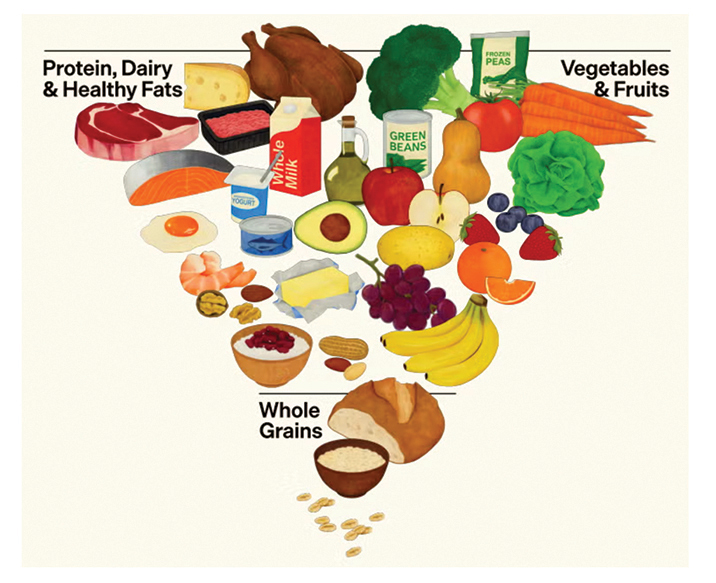
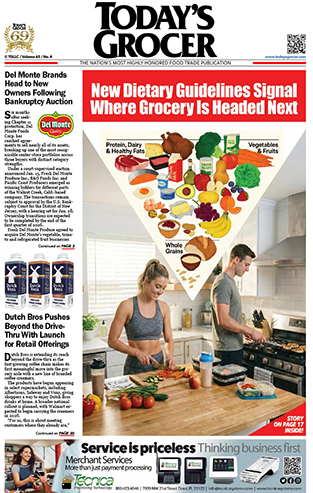
New Dietary Guidelines Signal Where Grocery Is Headed Next
The release of the 2025–2030 Dietary Guidelines for Americans is unlikely to trigger immediate resets in grocery assortments, but it does offer a clear read on where shopper expectations, product development and merchandising priorities are headed.
Issued by the U.S. Department of Health and Human Services and the USDA, the updated guidance reinforces themes already influencing food retail: higher protein intake, greater emphasis on fruits and vegetables, and reduced consumption of foods high in added sugars and sodium. For grocery retailers, the bigger question is how those recommendations translate amid ongoing price pressure, supply constraints and real-world shopping behavior.
The timing is notable. Food inflation has eased from recent peaks but remains uneven across departments, with dairy and protein categories still facing elevated costs. That reality complicates nutrition-forward messaging, particularly as shoppers continue to weigh health goals against affordability.
The guidelines also add momentum to continued scrutiny of highly processed foods and sweetened beverages, including soda, fruit drinks and energy drinks. While regulatory action is not immediate, retailers may see heightened shopper attention on ingredient transparency, portion sizes and better-for-you alternatives.
While the guidance does not impose restrictions at retail, it signals sustained pressure on center-store categories historically tied to volume and margin. As assortments evolve, execution will matter. Managing shorter shelf lives, reducing waste and fine-tuning inventory will be critical to keeping fresh and perimeter departments profitable.
Ultimately, sustained change will hinge on shopper behavior as much as manufacturer reformulation or retailer assortment shifts.
“Existing operating models across the supply chain are not designed to accelerate adoption of the pyramid and, in some cases, may slow broader uptake,” said Sebastián Garcia-Dastugue, associate professor of marketing and logistics at Florida International University’s College of Business. “Any meaningful transition will depend on whether consumer demand materializes at scale.”
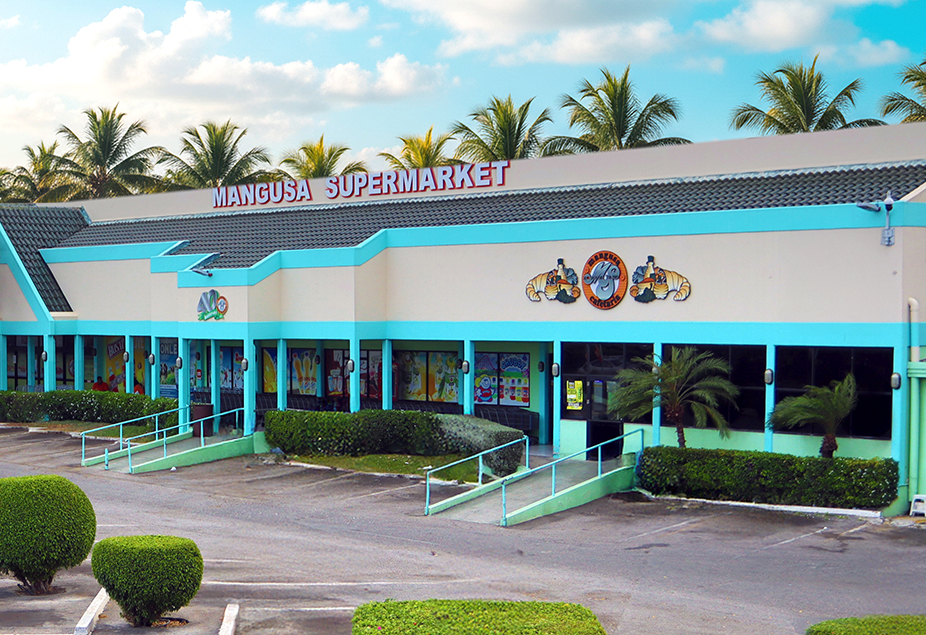
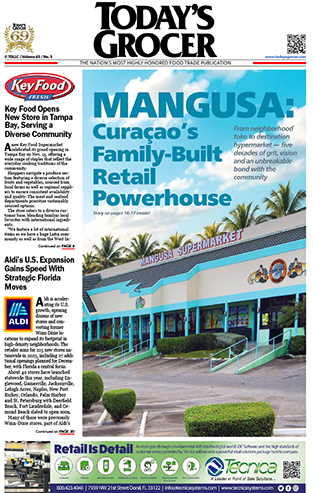
Mangusa: Curaçao’s Family-Built Retail Powerhouse
Mangusa stands today as the largest, best-known supermarket brand in Curaçao — a family-owned business that began as a single “toko” and grew, expansion by expansion, into a destination hypermarket that draws locals, tourists, and even weekend crowds who treat the store as a community hub.
The chain’s flagship Mangusa Hypermarket is now considered one of the island’s premier retail anchors, a place where customers shop, eat, linger in the food court, and enjoy a wide assortment of products that has far outgrown its beginnings.
“People love it, they find everything here,” said Anna Maria Sillé Goncalves Do Estreito, one of five siblings who runs the business. “It has become a destination… on Saturdays and Sundays it’s a party, people stay and chat, there’s music.”
The story of Mangusa begins with two migrants from Madeira, Portugal: Belmira Sousa de Lira and her husband, Francisco Gonçalves do Estreito, Sr. The couple opened their first small shop near the Janwe church in 1973, supplying it with produce from their land and supplementing the rest with goods from the floating market.
As the community grew, so did their business. The chain’s boldest milestone arrived in 2011 with the opening of the Mangusa Hypermarket on Cascoraweg. The family is now planning a full redevelopment of the Rio Canario supermarket.
Many families on the island “have grown alongside us,” the family said, forming a multigenerational relationship with the brand.
In many ways, the community’s enthusiasm continues to shape the company’s direction. “What people like is that we have grown, from what it was before,” said the family.
Advertisers


